
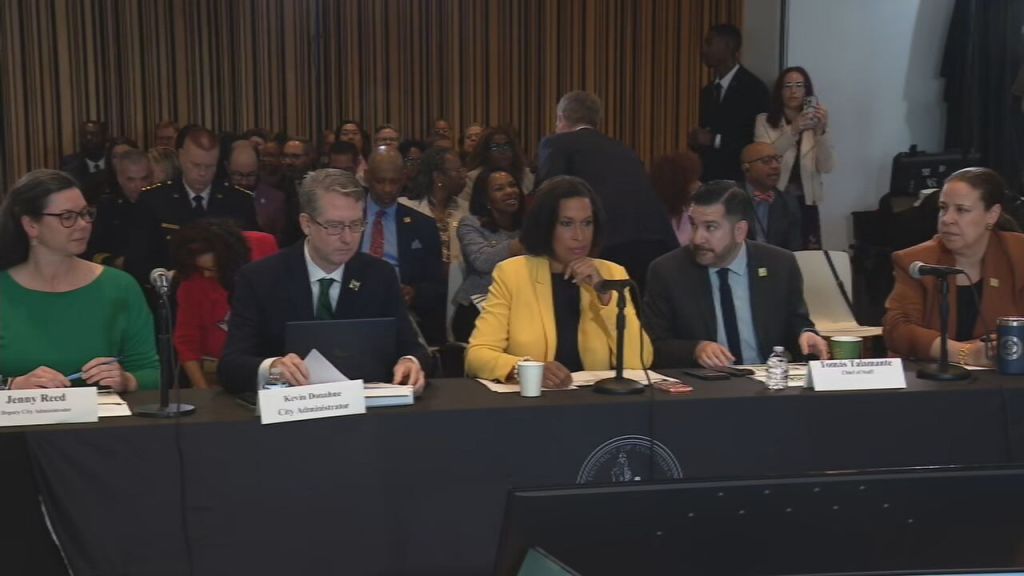
WASHINGTON, D.C. – Agencies responsible for ensuring government transparency have extended the use of closed door discussions, raising questions about how much decision-making is actually public. The Board of Ethics and Government Accountability (BEGA) sits at the center of this issue, further spotlighting executive sessions that limit public access to key government deliberations.
While laws like the Open Meetings Act (OMA) and the Freedom of Information Act (FOIA) are designed to restore public trust and government accountability, recent changes and added exemptions have increased confidentiality. As agencies like the Office of Open Government (OOG) work with limited enforcement authority, some advocates argue transparency and accountability has weakened.
Robert Becker, an attorney for the D.C. Open Government Coalition, said the current application of these laws have strayed from their original purpose.
“The goal is to have not only the votes happen in public, but have the debate in public,” Becker explained.
Origin and Modern Practice
The OMA was created in response to a series of D.C. government corruption scandals, intended to restore public trust in how officials make decisions. “The whole purpose was restoring trust,” Becker said, noting that the law’s original framers wanted every stage of government deliberation — not just the final vote — open to residents.
The District’s transparency laws were established to restore public trust following longstanding concerns over government corruption and secrecy. Across the country, open government laws developed in response to officials conducting public business in private. The OOG, a subagency within BEGA, was created to support these efforts by providing oversight and guidance for both the OMA and the FOIA.
Through the OMA, residents are able to see entire voting, discussions, and decision-making processes. The FOIA complements the OMA by giving the public access to government records, creating an additional layer of transparency. Together, these laws are meant to ensure accountability in government operations: the OMA governing how officials talk to each other, and the FOIA governing what records the public can request afterward.
Executive sessions are legally permitted to hold discussions for specific purposes such as ongoing investigations, legal advice, and personnel matters, as long as no official decision is reached. Under law, agencies must provide advanced notification with a planned agenda and reasoning prior to entering an executive session – typically at least 2 days before.
Niquelle Allen, director of the OOG, described her office’s role as closer to a referee than an enforcer.
“As far as our enforcement authority, we don’t have any,” said Allen. “We’re kind of the angel on the shoulder for the government.”
The office exists mainly to clarify the rules for agencies rather than police them, pointing agencies toward what she called “the proper ways of doing things” when questions arise.
Issues in Structure
Despite that guidance role, Becker said the original intent of the OMA’s current application has diminished over time.
“They are abusing the latitude they’ve been given by holding just about any meeting,” said Becker, “any meeting with the mayor…can be closed.”
That loophole has already played out in practice. After police body camera footage became a flashpoint in a separate accountability debate, the Council was forced to pass a new requirement mandating that footage-related data be submitted publicly.
The Council has also used emergency amendments to expand what qualifies for closed sessions, a process that allows changes to take effect with less public input than standard legislation.
The current practice of D.C. transparency laws has evolved over time to meet its balance for openness and confidentiality. The most recent changes to the OMA have changed the definition of “meetings” to clearly define what discussions are appropriate for private meetings – particularly between the Mayor and the Council.
Although executive sessions remain lawfully acceptable under specific, narrow circumstances, they have become, in practice, a tool for limiting public visibility into how decisions actually get made.
Few elected officials share those same concerns. Dem. Councilmember Janeese Lewis George, who voted against recent changes to the OMA alongside Dem. Councilmember Charles Allen, said in a statement from her office that an increase of private discussions may reduce public access.
“The latest changes permit more secrecy than is necessary, allowing decisions to be made outside of public view,” the statement said.
The OOG guides how these laws are applied by advising other agencies and reviewing complaints without direct discipline. Its office’s role is about guidance rather than actual enforcement. This is a structural limitation that leaves the office able to flag problems but not correct them.
Relation to the FY27 Budget Plan
The structure of transparency rules are also reflected in the proposed FY2027 budget. The mayor’s operating plan remains relatively flat for BEGA, while shifting funds between two sources: the Special Purpose Revenue fund and the Ethics and Accountability program.
BEGA’s Special Purpose Revenue fund is comprised of fees and fines collected from ethical lobbying violations. The Ethics and Accountability program is tasked with educating and training officials across multiple organizations.
The FY27 proposal shows a small increase to the Special Purpose Revenue fund, adding modestly to BEGA’s operating expenses. Within the Ethics and Accountability program, a large increase is directed toward “purchasable assets and contractual obligations,” while a small decrease is applied to the Special Purpose Revenue portion of that same program. At the same time, the budget shows a large decrease to salary and fringe benefits within the Ethics and Accountability program, used to help balance other service charges.
That marks a reversal from the prior year. The Mayor’s FY2027 proposal shifts that balance in the opposite direction — pulling funding away from salaries and fringe benefits to substantially increase contractual services instead.
Although the adjustments fit the agency’s needs, it is not enough to strengthen enforcement or staffing.
Structure Solutions
Despite the rules in place, Becker described a structural gap in transparency enforcement with no objective authority. Many advocates describe several structural solutions that strengthen accountability.
“The council has always had the ability to conduct closed sessions… but now they have created this gaping loophole,” Becker said. “It is no longer modern, and it has been circumvented in a lot of different ways.”
The structural gap is the lack of clear accountability or authority to ensure the laws are enforced. Some advocates, like Becker, suggest stronger independent oversight mechanisms, including updated technology that allows record accessibility to the public.
He suggested an independent body comprised of legal and technical experts that can properly oversee transparency enforcement and accountability from the mayor’s office. This committee can also restructure the OMA and the FOIA to ensure stronger safeguards for government transparency and public rights.
Allen pointed to a more basic problem underlying all of this: many residents don’t know these protections exist in the first place.
“A common misconception is that people don’t know their rights,” she said, arguing that public education may matter as much as any structural fix.
Lewis George’s statement emphasized the significance of supporting the public right to government decision-making.
“Transparency is essential to maintaining public trust, and we cannot defend our autonomy or serve our constituents effectively if our actions are shielded from scrutiny,” the statement said.

