Author: kii🔑

  • D.C. FY27 Budget Reflects Transparency Law Limits

    D.C. FY27 Budget Reflects Transparency Law Limits

    WASHINGTON, D.C. – Agencies responsible for ensuring government transparency have extended the use of closed door discussions, raising questions about how much decision-making is actually public. The Board of Ethics and Government Accountability (BEGA) sits at the center of this issue, further implicating executive sessions that limit public access to key government deliberations.

    While laws like the Open Meetings Act (OMA) and the Freedom of Information Act (FOIA) are designed to restore public trust and government accountability, recent changes and added exemptions have increased confidentiality. As agencies like the Office of Open Government (OOG) work with limited enforcement authority, some advocates argue transparency & accountability has weakened.

    Robert Becker, an attorney for the D.C. Open Government Coalition, said the current application of these laws have strayed from their original purpose.

    “The goal is to have not only the votes happen in public, but have the debate in public,” Becker explained.

    Issues in Structure

    The District’s transparency laws were established to restore public trust following longstanding concerns over government corruption and secrecy. Across the country, open government laws developed in response to officials conducting public business in private.

    Through the OMA,. residents are able see entire voting, discussions, and decision-making processes. The OOG, a subagency within BEGA, was created to support these efforts by providing oversight and guidance for both the OMA and the FOIA.

    The FOIA compliments the OMA by giving the public access to government records, creating an additional layer of transparency. Together, these laws are to ensure accountability in government operations.

    However, Robert Becker, a member of the D.C. Open Government Coalition, said the original intent of these policies have been diminished over time.

    “They are abusing the latitude they’ve been given by holding just about any meeting,” said Becker, “any meeting with the mayor…can be closed.”

    The current practice of D.C. transparency laws has evolved over time to meet their balance for openness and confidentiality. The most recent changes to the OMA have changed the definition of “meetings” to clearly define what discussions are appropriate for private meetings – particularly between the Mayor and the Council.

    Executive sessions are legally permitted to hold discussions for specific purposes such as ongoing investigations, legal advice, and personnel detailing, as long as no official decision is reached. Although it is lawfully acceptable, executive session have become a tool for limiting public viewership of government decision-making processes.

    Few elected officials share those same concerns. Dem. Councilmember Janeese Lewis George, who voted against recent changes to the Open Meetings Act alongside Dem. Councilmember Charles Allen, said in a statement from her office that an increase of private discussions may reduce public access.

    “The latest changes permit more secrecy than is necessary, allowing decisions to be made outside of public view,” the statement said.

    Under law, agencies must provide advanced notification with planned agenda and reasoning prior to entering an executive session – typically at least 2 days before. The

    The OOG guides how these laws are applied by advising other agencies and reviewing complaints without direct discipline. Their office’s roles is about guidance rather than actual enforcement.

    “As far as our enforcement authority, we don’t have any,” said Niquelle Allen, director to the OOG. “We’re kind of the angel on the shoulder for the government.”

    Relation to the FY27 Budget Plan

    The structure of transparency rules are also reflected in the proposed FY2027 budget. The mayor’s operating plan remains relatively flat for BEGA, while shifting funds within their Special Purpose Revenue – comprised of fees and fines from ethical lobbying violations, and the Ethics and Accountability program – tasked with educating and training officials across multiple organizations..

    While BEGA’s FY2026 budget previously increased spending on salary and fringe benefits, the mayor’s FY2027 proposed budget shifts funding priorities to increase nonpersonnel and contractual services by decreasing personnel costs. Although the adjustments fit the agency’s needs, it is not enough to strengthen enforcement or staffing.

    Structure Solutions

    Despite the rules in place, Becker described a structural gap in transparency enforcement with no objective authority. Many advocates describe several structural solutions that strengthen accountability.

    “The council has always had the ability to conduct closed sessions… but now they have created this gaping loophole,” Becker said. “It is no longer modern, and it has been circumvented in a lot of different ways.”

    The structural gap is the lack of authority responsibility to ensure the laws are enforced. Some advocates, like Becker, suggest stronger independent oversight mechanisms, including updated technology that allows record accessibility to the public.

    He suggested an independent body comprised of legal and technical experts that can properly oversee transparency enforcement and accountability from the mayor’s office. This committee can also restructure the OMA and the FOIA to ensure stronger safeguards for government transparency and public rights.

    Dem. Councilmember Janeese Lewis George’s statement emphasized the significance of supporting the public right to government decision-making.

    “Transparency is essential to maintaining public trust, and we cannot defend our autonomy or serve our constituents effectively if our actions are shielded from scrutiny,” the statement said.


  • Oversight Overreach?: Why D.C.’s Independent Investigation Bill Collapsed

    Oversight Overreach?: Why D.C.’s Independent Investigation Bill Collapsed

    Following multiple sexual harassment allegations against the Mayor’s former Chief of Staff and Deputy Mayor during the summer of 2023, the District introduced legislation seeking independent investigation requirements into harassment complains within the executive branch.

    The Sexual Harassment Investigation Integrity Amendment Act of 2023, introduced by Councilmember Brianne Nadeau (D-Ward 1), aimed to have specific harassment complaints be investigated independently rather than through internal agencies, with the goal of promoting transparency and public trust in the executive branch.

    The legislation passed multiple public hearings but did not advance beyond the committee meeting stage. During the same legislative period, the D.C. Human Rights Act was amended to strengthen protections while the independent investigation efforts ultimately failed.

    Testimony and agency feedback indicated the bill’s failure stemmed from fiscal feasibility, statutory authority, jurisdiction limitations, and the operational capacity of the Office of the Inspector General (OIG). The true issue was not solely in the cost of independent investigations, but whether the District’s existing oversight infrastructure was structured to support this particular mandate.

    The legislation required the oversight of the OIG or contracting of independent counsel during investigations involving executive officials; however, Inspector General Daniel W. Lucas’ testimony noted the agency’s traditional jurisdiction specializes in fraud, waste abuse and Medicaid related investigations – not employment-based misconduct.

    Matthew Ramos, Program Manager of External Affairs for the OIG elaborated on the structural and fiscal concerns raised in the Inspector General’s hearing testimony.

    “Our focus is on fraud, waste abuse, mismanagement, or corruption within government programs and operations,” Ramos said. “Sexual harassment cases are typically handled through internal human resources channels or other designated agencies.”

    Ramos explained the OIG’s investigation plans primarily handle the integrity of government programs and public funds. He noted that implementing a long-term independent investigation aspect would require resources beyond of the Office’s existing investigative initiatives.

    For the case involving the former Deputy Mayor for Planning and Economic Development, the OIG acknowledged the concerns for outside counsel which ultimately crossed into other agencies such as the Office of Human Rights.

    Ramos emphasized other existing mechanisms in place for handling harassment complaints designed with sexual harassment officers and alternative reporting outlets within multiple agencies.

    “Each agency has what’s called a Sexual Harassment Officer (SHO),” Ramos said. “If employees feel uncomfortable going to their own officer because of a conflict, there are alternative avenues for them to file a complaint.”

    Vasu Reddy, Director of State Policy for Workplace Justice at the National Women’s Law Center, said independent investigations play a critical role in addressing workplace harassment.

    “Power dynamics create the environment that allows harassers to avoid accountability,” Reddy explained. “The risk of coming forward is too high for many victims — and when it’s clear their harasser can influence the investigative process, that fear and lack of faith that their rights will be vindicated is even more justified.”

    Because harassment complaints fall outside of the OIG’s traditional jurisdiction, implementing the legislation would require the expansion of the agency’s operational boundaries rather than rearranging agency investigative responsibility.

    Beyond these juridical limitations, fiscal concerns were also a major element in the bill’s demise. The Inspector General’s testimony noted a single independent investigation could cost up to $600,000 – an estimate to sustainin months of review required for processes through independent counsel.

    For this legislation, it would take more than the fiscal budgeting to properly build structural reforms. The bill ultimately centered not only on an affordability aspect, but on whether internal systems are structured to support those without power.

    Both Ramos and Reddy agreeed that the best solution is to begin the work internally to build safe environments and communicated outlets for reports.

    Reddy said, “The greatest cost saver is preventing harassment in the first place, and effective, unbiased enforcement is an essential component of prevention.”

  • Men’s Tennis to Play Villanova for the First Time

    Men’s Tennis to Play Villanova for the First Time

    Bison head to Philadelphia as both teams look to gain early-season momentum

    WASHINGTON, D.C. — Howard’s Men’s Tennis team will have their first ever nonconference matchup on Friday, Feb. 6 against the Villanova Wildcats at 7 P.M. at the Bryn Mawr Country Club. The match marks the first-ever meeting between the two men’s tennis programs.

    FOLLOW THE ACTION

    Bison fans can follow the match live via live results.

    Howard recently opened the spring season on Jan. 31 at Georgetown after their original opening match was postponed due to strong winter weather.

    MATCHUP PREVIEW

    Bison Watch

    Howard heads into Friday’s faceoff building off the positives from the season opener at Georgetown, where the Bison showed competitive effort despite the outcome. The Bison showed promise across singles and doubles as the spring season gets underway.

    Wildcat Watch

    Villanova also enters the match up looking to rebound after recent losses against Drexel and the University of Delaware, setting tensions higher between two teams eager to gain early-season confidence.

    LAST TIMEOUT

    Howard last faced Georgetown on Jan. 31 as its replaced season opener. Junior Michael Major Jr. (Nassau, Bahamas) secured the Bison’s lone point in a singles victory, while freshmen Marcus Weekes (London, UK) and Nathan Bermeo (Durham, NC) showed promise in a competitive doubles performance.

    UPCOMING SCHEDULE

    The Bison travel further north to another non-conference matchup at University of Delaware on Saturday, Feb. 7 at 11 a.m. at the DuPont Country Club, marking the second road match of the weekend and Howard’s reunion with the Blue Hens since last season.

    PLAYERS MENTIONED

    Michael Major Jr. 6’2” / Junior

    Marcus Weekes Freshman

    Nathan Bermeo Freshman

    Look here for the published article by HUBison.

    For more information, visit the Bison Athletics website at www.hubison.com.

  • F.C.C.D Spotlight

    F.C.C.D Spotlight

    First Choice Career Development Program

    How Grassroots Organizations Fill Gaps in DC’s Employment System

    Washington D.C. — Programs like the First Choice Career Development (FCCD), supported by the Center for Nonprofit Advancement (CNA), are helping District residents transform the current short-term employment cycle into long-term career opportunities via training, certifications, and follow-up support.

    While initiatives like the Marion Barry Summer Youth Employment Program (MBSYEP) and the First Source Program place residents in jobs, many participants struggle to turn those placements into lasting careers. Through resources provided by the Center for Nonprofit Advancement, community-based programs help District residents build marketable skills and remain competitive in DC’s workforce ecosystem.

    Glen O’Gilvie, CEO of the Center for Nonprofit Advancement (CNA), said the distinction between short-term jobs and long-term careers is central to FCCD’s mission.

    “What we’re always talking about are careers and not just jobs,” O’Gilvie said. “We don’t want people to become professional program participants — we want to see them enter a career and grow their earning potential.”

    Glen O’Gilvie, CEO of the Center of Nonprofit Advancement

    Structure Similarities Across Workforce Programs

    Across DC’s workforce ecosystem, many programs — both government-funded and nonprofit-led — follow a similar structure: recruitment, short-term training, and job placement. Workforce experts note that while most programs effectively get residents in the door, long-term employment retention remains a persistent challenge.

    Tanya Borachi, Director of Education and Workforce Initiatives at the Federal City Council, said the District has a high volume of workforce activity but struggles with long-term outcome track.

    “DC’s workforce pipeline is at a moment of opportunity,” Borachi said, “General career support from providers isn’t enough; candidates need industry-aligned coaching and preparation to secure entry-level positions that will launch their careers.”

    Borachi noted that many programs are primarily evaluated based on job placement numbers while highlighting high success in other government workforce initiatives such as the Office of Education Through Employment Pathways, having the Education Through Employment Data System to measure traffic through the government workforce training programs.

    Without the addition of consistent tracking of long-term indicators like retention, wage growth or continued education, it becomes difficult to see what government program models are preparing residents for sustainable employment.

    This limitation is not unique to general workforce initiatives, O’Gilvie acknowledged.

    “One of the biggest challenges across workforce programs is making sure there are jobs ready at the other end,” he said.

    FCCD’s Origin Story

    First Choice Masonry → Foundation → FCCD

    The FCCD program grew from a fruitful partnership between a local construction company, First Choice Masonry, and the Center for Nonprofit Advancement in design to address workforce gaps at the intersection of community-based support and public workforce pipelines.

    The Center for Nonprofit Advancement is an association of more than 800 nonprofit organizations across the DMV region, in the last decade launching new fiscal partnerships and management assistance programs. Through their management assistance partnership with First Choice Masonry to develop First Choice Foundation, specifically focused on community benefit and workforce development.The numerous workforce opportunities ultimately led to the First Choice Career Development (FCCD) training program,

    The FCCD program was designed to get unemployed District residents multi-skilled in construction as a career pipeline in direct contact with First Choice Masonry’s plethora of subcontractors and construction connections.

    What Makes FCCD Different

    While many workforce programs share similar structures, the FCCD program was intentionally designed to address the gaps that often defer the transfer from short-term employment to long-term careers.

    By building a curriculum around the specific skills and certifications employers required, paired with a direct pipeline to industry connections. Upon graduation, participants receive professionally-recognized credentials — including OSHA 30 and safety certifications — alongside soft-skills training focusing on professional readiness.

    The FCCD program also addresses the unpaid training struggles that becomes a crippling financial pressure for the duration of the program. “The bills keep coming,” O’Gilvie noted, “That can set someone up to struggle before they ever have the chance to succeed.” Through partnerships with agencies such as the Department of Employment Services, FCCD participants receive compensation during training, allowing them to remain focused and engaged with their career development.

    Upon graduation, participants are given opportunities to interview in a job-fair style exposure to industry-employers, subcontractors, and/or First Choice Masonry. Program staff remain in contact with graduates after hiring to help troubleshoot workplace challenges and navigate the adjustment to full-time employment. This model resulted in about 85-90% of participants with job security following graduation, but as Borachi has emphasized, success should be measured not simply by job placement.

    Measuring Success Beyond Placement

    For workforce leaders, success is defined by their ability to retain employment and overall skill growth for long-term stability. Metrics such as wage progression, continued education, and sustained employment provide a clear picture of the workforce programs’ effectiveness.

    The FCCD Program monitors participants’ engagement through attendance and time logs, tracking consistency, punctuality, and completion throughout the program for sustained participation and skill acquisition.

    Although the District continues to invest in government-funded employment initiatives, public programs often serve as entry points to the workforce; ensuring participants have the support, training, and employer alignment to transition them confidently to sustainable employment beyond their first offer.

    This distinct transition training is especially visible to those transitioning out of structured systems. An Air Force veteran — who wishes to remain anonymous — described their struggles translating military experience into civilian employment that offers long-term stability.

    “It feels like I’m starting over because I have to build all new connections outside the military,” the veteran said. “But I’m also building on something because I’m leaving with skills, certifications, and education.”

    Despite access to similarly structured military-workforce resources, the service worker feels uncertainty in civilian professional growth.

    The FCCD’s Leadership Program focuses on preparing participants not only for the technical demands of a niche job, but for the overall necessities for workplace success. In addition to industry certifications, participants receive coaching in communication, time management, teamwork, and professional accountability. The specific leadership training is evidently useful among individuals transitioning out of highly structured environments.

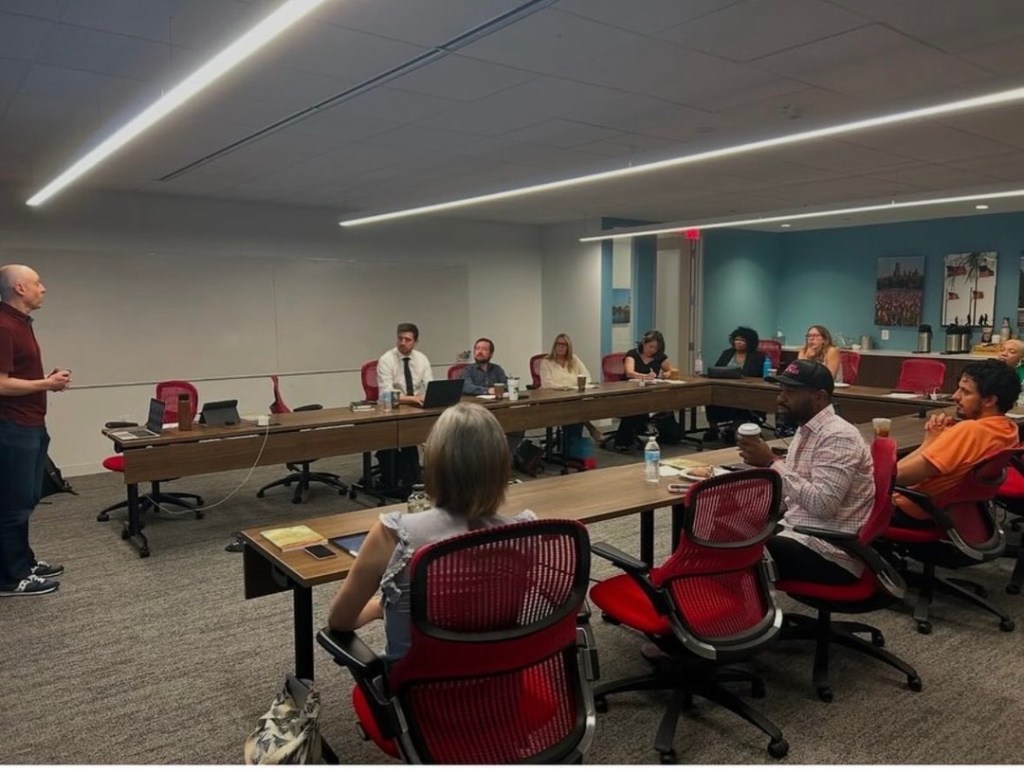
    Despite access to structured transition resources, the service member said the absence of ongoing mentorship and professional guidance makes civilian career growth feel uncertain — a gap FCCD’s leadership-focused approach is designed to address. The Center for Nonprofit Advancement has another similar leadership development program called the Executive Preparation Institute (EPI) [Featured Photo], a program that trains executives and upcoming leaders across the District for the next step in their career.

    The FCCD program’s emphasis on leadership development alongside technical training equips participants with the confidence and adaptability needed to navigate workplace expectations, advance within their fields, and avoid cycling back into unemployment.