

First Choice Career Development Program
How Grassroots Organizations Fill Gaps in DC’s Employment System
Washington D.C. — Programs like the First Choice Career Development (FCCD), supported by the Center for Nonprofit Advancement (CNA), are helping District residents transform the current short-term employment cycle into long-term career opportunities via training, certifications, and follow-up support.
While initiatives like the Marion Barry Summer Youth Employment Program (MBSYEP) and the First Source Program place residents in jobs, many participants struggle to turn those placements into lasting careers. Through resources provided by the Center for Nonprofit Advancement, community-based programs help District residents build marketable skills and remain competitive in DC’s workforce ecosystem.
Glen O’Gilvie, CEO of the Center for Nonprofit Advancement (CNA), said the distinction between short-term jobs and long-term careers is central to FCCD’s mission.
“What we’re always talking about are careers and not just jobs,” O’Gilvie said. “We don’t want people to become professional program participants — we want to see them enter a career and grow their earning potential.”

Structure Similarities Across Workforce Programs
Across DC’s workforce ecosystem, many programs — both government-funded and nonprofit-led — follow a similar structure: recruitment, short-term training, and job placement. Workforce experts note that while most programs effectively get residents in the door, long-term employment retention remains a persistent challenge.
Tanya Borachi, Director of Education and Workforce Initiatives at the Federal City Council, said the District has a high volume of workforce activity but struggles with long-term outcome track.
“DC’s workforce pipeline is at a moment of opportunity,” Borachi said, “General career support from providers isn’t enough; candidates need industry-aligned coaching and preparation to secure entry-level positions that will launch their careers.”
Borachi noted that many programs are primarily evaluated based on job placement numbers while highlighting high success in other government workforce initiatives such as the Office of Education Through Employment Pathways, having the Education Through Employment Data System to measure traffic through the government workforce training programs.
Without the addition of consistent tracking of long-term indicators like retention, wage growth or continued education, it becomes difficult to see what government program models are preparing residents for sustainable employment.
This limitation is not unique to general workforce initiatives, O’Gilvie acknowledged.
“One of the biggest challenges across workforce programs is making sure there are jobs ready at the other end,” he said.
FCCD’s Origin Story
First Choice Masonry → Foundation → FCCD
The FCCD program grew from a fruitful partnership between a local construction company, First Choice Masonry, and the Center for Nonprofit Advancement in design to address workforce gaps at the intersection of community-based support and public workforce pipelines.
The Center for Nonprofit Advancement is an association of more than 800 nonprofit organizations across the DMV region, in the last decade launching new fiscal partnerships and management assistance programs. Through their management assistance partnership with First Choice Masonry to develop First Choice Foundation, specifically focused on community benefit and workforce development.The numerous workforce opportunities ultimately led to the First Choice Career Development (FCCD) training program,
The FCCD program was designed to get unemployed District residents multi-skilled in construction as a career pipeline in direct contact with First Choice Masonry’s plethora of subcontractors and construction connections.
What Makes FCCD Different
While many workforce programs share similar structures, the FCCD program was intentionally designed to address the gaps that often defer the transfer from short-term employment to long-term careers.
By building a curriculum around the specific skills and certifications employers required, paired with a direct pipeline to industry connections. Upon graduation, participants receive professionally-recognized credentials — including OSHA 30 and safety certifications — alongside soft-skills training focusing on professional readiness.
The FCCD program also addresses the unpaid training struggles that becomes a crippling financial pressure for the duration of the program. “The bills keep coming,” O’Gilvie noted, “That can set someone up to struggle before they ever have the chance to succeed.” Through partnerships with agencies such as the Department of Employment Services, FCCD participants receive compensation during training, allowing them to remain focused and engaged with their career development.
Upon graduation, participants are given opportunities to interview in a job-fair style exposure to industry-employers, subcontractors, and/or First Choice Masonry. Program staff remain in contact with graduates after hiring to help troubleshoot workplace challenges and navigate the adjustment to full-time employment. This model resulted in about 85-90% of participants with job security following graduation, but as Borachi has emphasized, success should be measured not simply by job placement.
Measuring Success Beyond Placement
For workforce leaders, success is defined by their ability to retain employment and overall skill growth for long-term stability. Metrics such as wage progression, continued education, and sustained employment provide a clear picture of the workforce programs’ effectiveness.
The FCCD Program monitors participants’ engagement through attendance and time logs, tracking consistency, punctuality, and completion throughout the program for sustained participation and skill acquisition.
Although the District continues to invest in government-funded employment initiatives, public programs often serve as entry points to the workforce; ensuring participants have the support, training, and employer alignment to transition them confidently to sustainable employment beyond their first offer.
This distinct transition training is especially visible to those transitioning out of structured systems. An Air Force veteran — who wishes to remain anonymous — described their struggles translating military experience into civilian employment that offers long-term stability.
“It feels like I’m starting over because I have to build all new connections outside the military,” the veteran said. “But I’m also building on something because I’m leaving with skills, certifications, and education.”
Despite access to similarly structured military-workforce resources, the service worker feels uncertainty in civilian professional growth.
The FCCD’s Leadership Program focuses on preparing participants not only for the technical demands of a niche job, but for the overall necessities for workplace success. In addition to industry certifications, participants receive coaching in communication, time management, teamwork, and professional accountability. The specific leadership training is evidently useful among individuals transitioning out of highly structured environments.
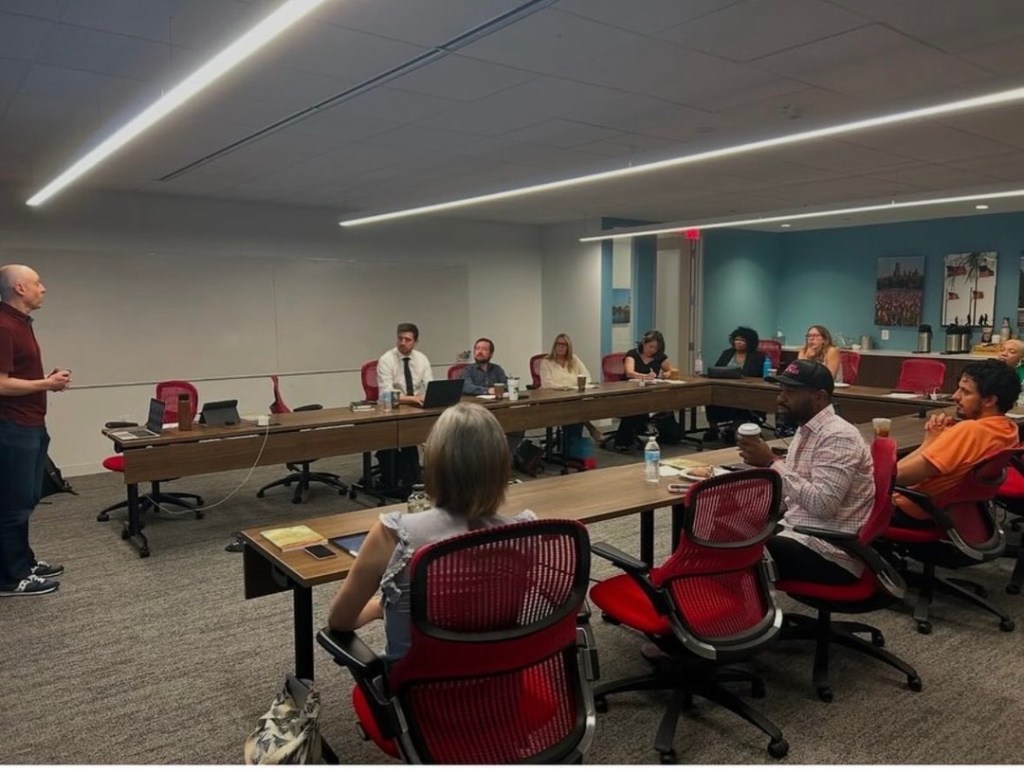
Despite access to structured transition resources, the service member said the absence of ongoing mentorship and professional guidance makes civilian career growth feel uncertain — a gap FCCD’s leadership-focused approach is designed to address. The Center for Nonprofit Advancement has another similar leadership development program called the Executive Preparation Institute (EPI) [Featured Photo], a program that trains executives and upcoming leaders across the District for the next step in their career.
The FCCD program’s emphasis on leadership development alongside technical training equips participants with the confidence and adaptability needed to navigate workplace expectations, advance within their fields, and avoid cycling back into unemployment.
 Let's tell a story together!
Leave a comment